

If you have ever watched a toddler struggle to pick up a cracker or hold a crayon the "wrong" way, you have already seen fine motor skills in action. These are the small, precise movements of the hands and fingers that most adults do without thinking, but that take toddlers years of practice to build. This guide breaks down what fine motor skills actually are, when they typically develop, and which toys genuinely help rather than just look good on Instagram.
What Exactly Are Fine Motor Skills?
Fine motor skills involve the small muscles in the hands and wrists working together with the eyes. Every time your child picks up a raisin, turns a page, or scribbles with a crayon, they are using fine motor coordination. These skills form the foundation for later abilities like writing, buttoning a shirt, and using scissors.
This is different from gross motor skills, which involve the larger muscles used for walking, jumping, and climbing. Both matter, but fine motor skills tend to get less attention even though they are just as important for school readiness.
Fine Motor Milestones by Age
Every child develops at their own pace, so treat these as general guidelines rather than strict deadlines. Here is what most toddlers can typically do at each stage
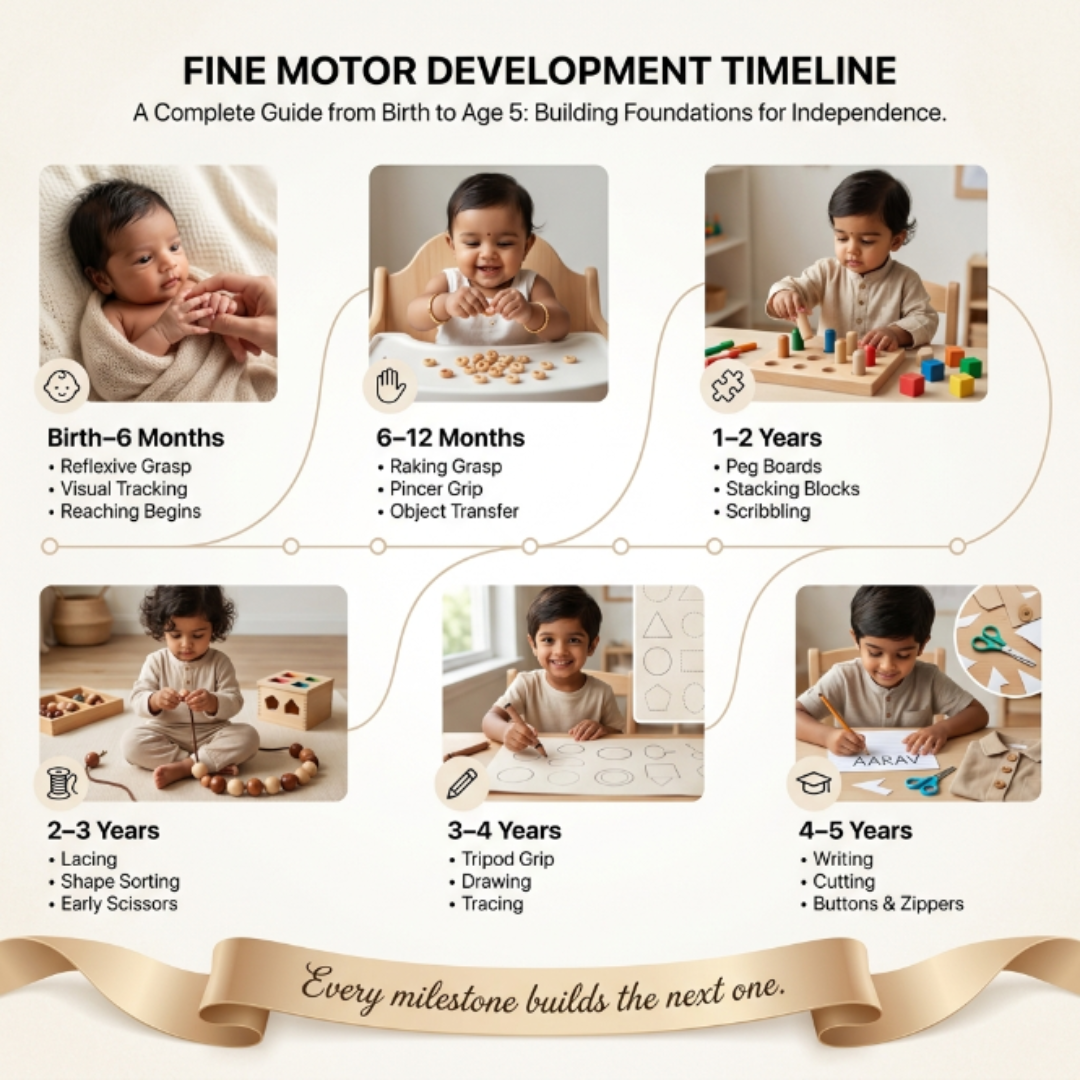
| Age | Typical Fine Motor Skills |
|---|---|
| 9–12 months | Develops pincer grasp (thumb and index finger), transfers objects between hands, claps hands |
| 12–18 months | Builds a 2-block tower, scribbles with a crayon, points with index finger, turns thick book pages |
| 18–24 months | Builds a 4 to 6 block tower, places large pegs into a pegboard, strings large beads, turns pages 2–3 at a time |
| 2–3 years | Holds crayon with fingers (not fist), snips paper with safety scissors, builds a 9-block tower, turns single pages |
| 3 years | Copies a circle, strings medium beads, screws and unscrews lids, cuts paper in half with scissors |
Notice how peg boards and beads show up repeatedly in this list. That is not a coincidence, these are exactly the kinds of controlled, repetitive hand movements that build the strength and precision needed for pincer grip and, later, pencil grip.
Why the Pincer Grip Matters So Much
The pincer grip, using just the thumb and index finger to pick up small objects, usually develops between 9 and 10 months of age
It might seem like a small thing, but it is actually one of the most important fine motor milestones because almost every self-help and pre-writing skill builds on top of it.
Without a solid pincer grip, a child will struggle later with holding a pencil correctly, buttoning clothes, or using scissors. This is exactly why occupational therapists pay close attention to this specific milestone, and why toys designed around small-object manipulation, like peg boards, are recommended so often.
Signs of Delay (And When Not to Panic)
It is completely normal for children to hit milestones at slightly different times. But a few signs are worth mentioning to your pediatrician:
- No pincer grasp attempt by 12 to 15 months
- Cannot hold a crayon or stack even 2 blocks by 18 months
- Consistently avoids using hands during play, or strongly favors one hand very early (before 2 years)
- Shows frustration or gives up quickly on simple hand tasks like opening a container
One or two of these on their own usually is not a reason to worry immediately. But if you notice several together, or your gut tells you something feels off, it is worth a conversation with a pediatric occupational therapist. Early support makes a real difference.
Which Toys Actually Help (Not Just Look Nice)
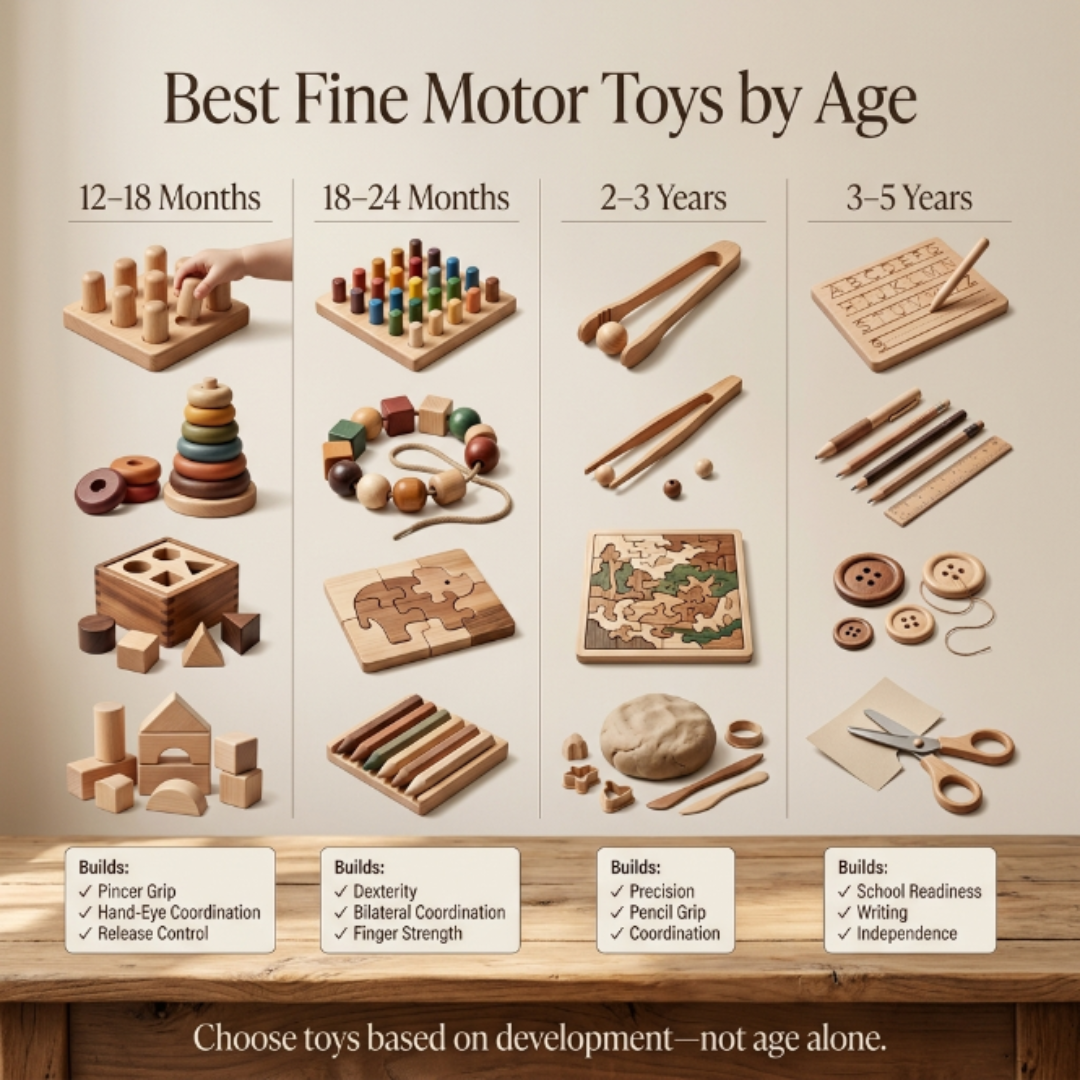
Not every toy labeled "educational" actually builds fine motor skills. The best ones share one thing in common: they require a child to grasp, aim, and release with control.
- Peg boards - directly practice pincer grip, hand-eye coordination, and controlled release
- Lacing toys - build bilateral coordination (using both hands together)
- Stacking blocks - develop grip strength and spatial judgment
- Tongs and tweezer activities - strengthen the exact muscles used in pencil grip
- Simple puzzles with knobs - combine pincer grip with problem-solving
Among these, peg boards are often considered one of the most versatile because they scale in difficulty. You can start with large, easy-to-grab pegs for a 1-year-old and move to smaller pegs and patterns as your child's grip matures.
Want to try it yourself? Our Educational Peg Boards are designed with age-appropriate peg sizes to safely build pincer grip and hand-eye coordination from 12 months onward.
Shop Educational Peg BoardsFrequently Asked Questions
What are fine motor skills in toddlers?
They are the small, precise hand and finger movements a child uses to pick up objects, hold a crayon, or turn pages. These skills depend on coordination between the eyes and hands and develop gradually through repeated practice.
When does the pincer grip develop in babies?
Most babies develop a pincer grip between 9 and 10 months, and it becomes more refined by around their first birthday
What fine motor skills should a 2-year-old have?
By age 2, most toddlers can stack 4 to 6 blocks, place large pegs into a board, scribble with a crayon, and string large beads
].
Do peg boards actually help fine motor development?
Yes. They practice grasping, aiming, and releasing with control, the exact movements that support pincer grip and later pencil grip. This is why occupational therapists frequently recommend them.
When should I worry about my toddler's fine motor development?
If your child shows no pincer grasp by 12 to 15 months, cannot hold a crayon by age 2, or consistently avoids hand-based play, it is worth mentioning to a pediatrician or occupational therapist.