

By Montessori Toys · Updated July 2026 · 17 min read
Handwriting Progress Over Time: What Parents and Teachers Can Expect from Fine Motor Support and OT
In this guide:
Many parents first notice handwriting challenges when homework becomes a battle, letters look cramped or uneven, or written work does not reflect what a child is capable of saying out loud. Occupational therapy and targeted fine-motor support can help, but it is important to know that change takes time and that small steps forward are valuable. Handwriting is a complex motor skill that depends on posture, core and shoulder stability, finger strength, hand-eye coordination, visual memory, proprioception, praxis, and executive function
Why Handwriting Progress Is Gradual
Handwriting and fine-motor skills develop gradually as children strengthen the small muscles in their hands and improve coordination Underlying motor issues like weak hand strength, immature grasp, poor postural stability, or visual-motor integration difficulties need repeated practice to improve and support efficient, comfortable writing
Guidance for parents and teachers emphasises that improvements are typically seen over weeks and months rather than days, especially when children are developing multiple skills at once, such as letter formation, spacing, and stamina for longer tasksRecognising this gradual trajectory can reduce pressure on the child and help adults celebrate small but meaningful changes.
What Progress Actually Looks Like
Resources for families and schools highlight several practical signs of progress that parents and teachers can look for :
- Letters gradually become more recognisable and consistent in shape, even if they are not yet perfectly aligned or sized.
- Spacing between words and letters improves, with fewer letters overlapping or drifting off the lines
- Children can complete slightly longer writing tasks without as much hand pain, frustration, or need for breaks
- Avoidance decreases: children may still prefer shorter writing tasks, but show less distress and more willingness to practise when supports are in place
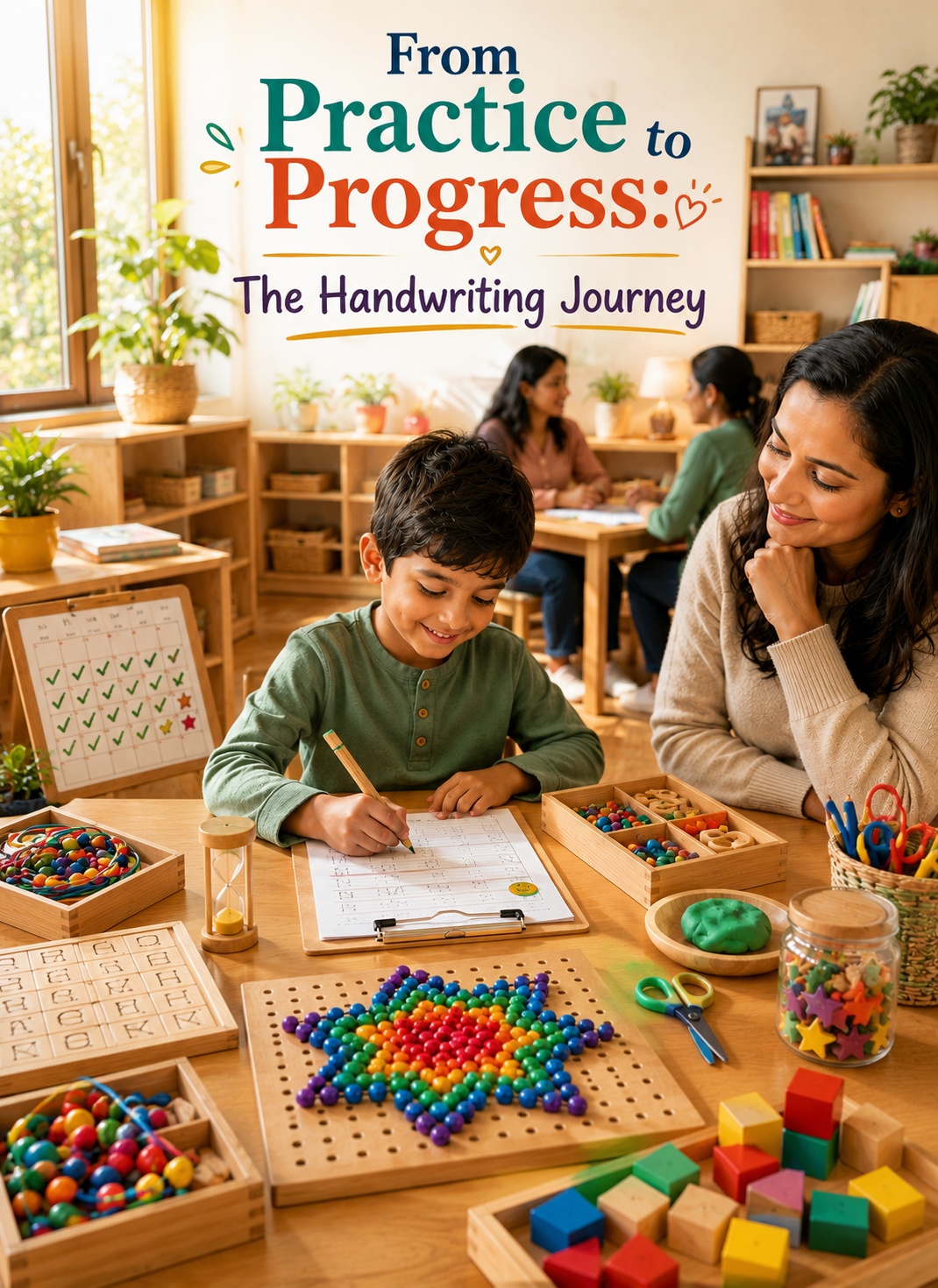
Progress Markers at a Glance
The table below summarises common markers of progress that occupational therapists and school teams often monitor over time
| Area | Early signs of progress |
|---|---|
| Letter formation | More consistent shapes and starting points; fewer reversed letters; letters better matched to models on the page |
| Spacing and alignment | Words separated more clearly; letters staying within lines or boxes more often; improved left-to-right tracking |
| Grip and posture | Gradual shift toward a more mature tripod or quadrupod grasp; less “hooking” or extreme wrist flexion; more stable sitting posture at the desk |
| Endurance and speed | Able to write slightly more in the same time; hand fatigue and complaints decrease; speed improves without major loss of legibility |
| Independence and self-monitoring | Children start to notice and correct mistakes themselves, using simple checklists or prompts like “Name, date, spaces, full stop” |
Schools often use simple monitoring tools, such as periodic handwriting samples, teacher observations, and OT checklists, to track change in these areas across a term or school year
How OT and Supports Work Together
Occupational therapists typically start by assessing posture, grasp, visual-motor integration, sensory regulation, and underlying fine-motor skills, then design intervention plans that combine whole-body warm-ups, fine-motor play, and targeted handwriting practice OT sessions may use activities like animal walks, wall push-ups, Theraputty, peg boards, and visual-motor games to build the foundations for more efficient writing [
At the same time, OTs often recommend classroom accommodations (e.g., slant boards, adapted paper, visual guidelines) and home routines to encourage “carryover,” meaning the child uses new skills and strategies in everyday tasks, not just in therapy The combination of direct intervention, environmental supports, and practice in real contexts tends to lead to more sustained progress.
Setting Realistic Goals and Timelines
School and clinic teams often use SMART goals (Specific, Measurable, Action-based, Realistic, Time-limited) to describe desired handwriting changes over a clear period, such as one term ]. For example, a goal might focus on a child forming a set of letters consistently, maintaining spacing in one short sentence, or increasing legible words per minute in a timed writing task.
Parents can ask how progress will be measured, how often it will be reviewed, and what they can do at home to support these goals. Understanding that progress might mean “letters now mostly readable” rather than “perfect joined writing” within a given timeframe helps align expectations with developmental norms and underlying skill growth
Frequently Asked Questions
How long does it usually take to see handwriting progress?
Families often notice early changes within several weeks of consistent support, with clearer, more comfortable handwriting developing over months rather than days.
What if my child’s writing still looks messy?
Messy handwriting can reflect underlying motor, sensory, or executive function challenges, and gradual improvements in these areas may come before handwriting looks neat.
How can we track progress at home and school?
Save samples of writing over time, note changes in legibility, spacing, and stamina, and use simple checklists or rating scales shared between parents, teachers, and OT.
Does my child need occupational therapy?
OT is helpful when handwriting challenges are significantly impacting schoolwork, self-esteem, or independence, and when classroom and home supports alone are not enough.
How can I support OT goals at home?
Follow any home programme suggestions, keep practice short and positive, and focus praise on effort, clarity, and small improvements rather than speed or perfection.
Related reading:
- Home Routines for Fine Motor and Handwriting: Daily Activities That Work
- Sensory-Friendly Classrooms and Handwriting: Classroom Supports for Fine Motor Skills
- Executive Function and Handwriting: Attention, Memory, and Fine Motor Skills
- Praxis and Motor Planning in Children: Development, Activities, and Milestones
- Proprioception and Pencil Pressure: Why Kids Write Too Hard or Too Light
- Bilateral Coordination in Children: Development, Activities, and Milestones
- Hand-Eye Coordination in Children: Visual-Motor Development by Age
- Hand Dominance in Children: When It Develops and Why You Shouldn't Choose
- Crossing the Midline in Children: Why It Matters for Writing and Coordination
- Tactile Sensitivity and Fine Motor Skills: Helping Kids Who Avoid or Crave Touch
- Sensory-Friendly Fine Motor Routine: Daily Activities That Help Kids Focus
- Vestibular Input and Fine Motor Skills: Helping Active Kids Focus Through Movement
- Sensory Seekers and Fine Motor Skills: Helping Kids Focus Through Movement
- Fine Motor Milestones Birth to Age 5: Complete Development Chart
Ready to support handwriting progress with the right foundations? Our Educational Peg Boards are ideal for building hand strength, coordination, and pattern skills that make writing more comfortable over time.
Shop Educational Peg Boards Visit Our Google Business ProfileMontessori Toys Team
We research child development guidelines to help parents and teachers understand how fine-motor and handwriting skills grow over time.