

Writing Readiness for Kids: Fine Motor Skills Ages 2–5
In this guide:
What Writing Readiness Means
Writing readiness is the set of skills children need before handwriting starts to feel manageable. It includes the ability to sit and move well, use the hands with control, track with the eyes, and stay with a task long enough to make progress.
It is not one skill that appears on a single birthday. Instead, readiness develops gradually as children gain strength, coordination, sensory comfort, and confidence through everyday play and routine activities.
This topic links closely to your Is Your Child Ready to Write? Fine Motor Skills by Age post and your Fine Motor Milestones Birth to Age 5 guide, which help readers see the full developmental picture.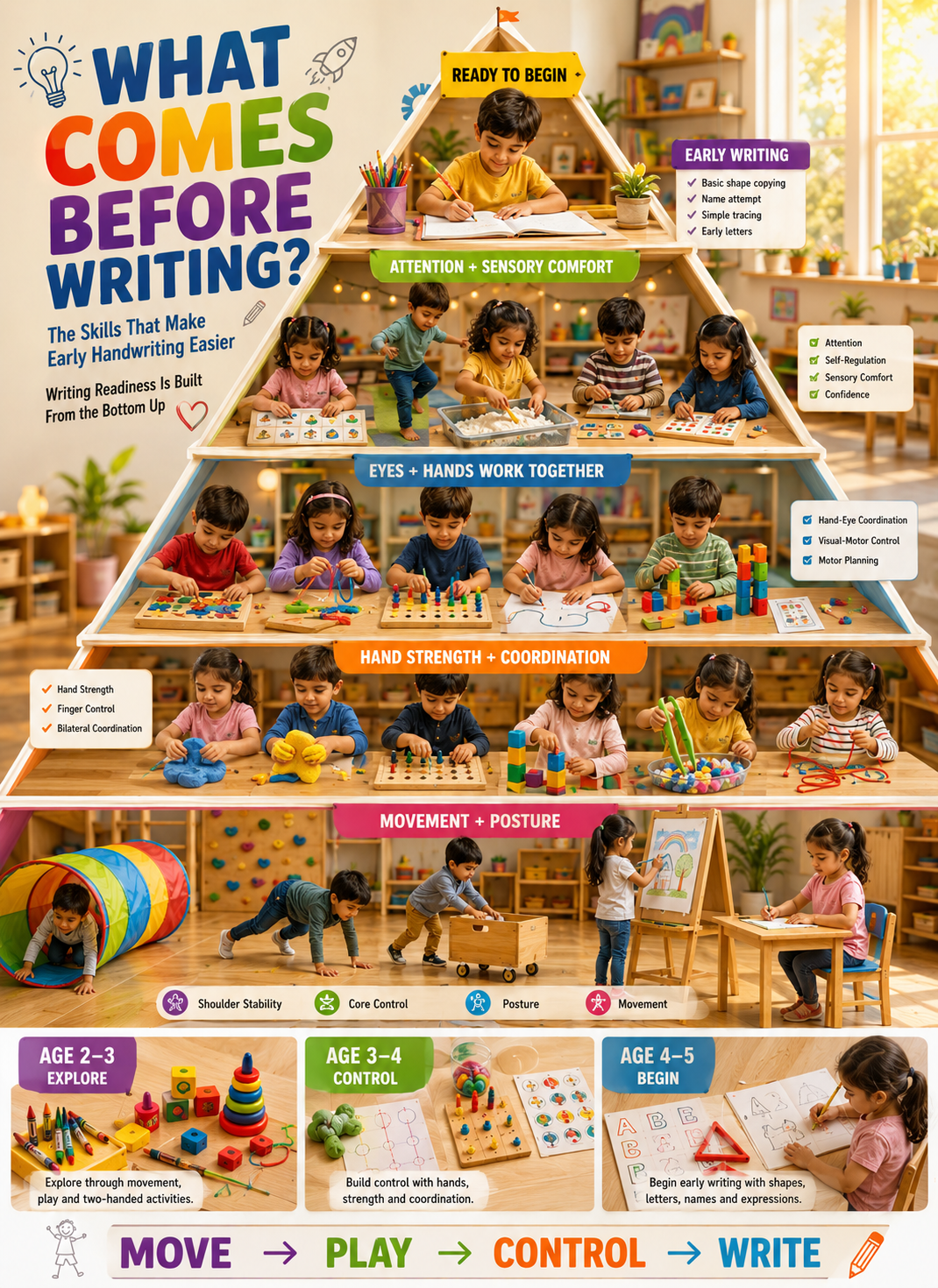
Age 2–3: Early Hand Use
At age two to three, the goal is not handwriting. The goal is to build the basic hand and arm control that makes later writing possible, while keeping activities fun and low-pressure.
What children often do at this age: Scribble, push toys, stack blocks, turn pages, and use both hands during play. These early actions help develop the strength and coordination needed for future writing.
Helpful activities: Large crayons, blocks, water play, lacing, shape sorters, and simple drawing on a wall or easel. Your Hand-Eye Coordination in Children and Bilateral Coordination in Children posts are useful here because both skills support early tool use.
Age 3–4: Pre-Writing Play
Between three and four years old, many children are ready for more directed drawing and copying activities. This is the age when they begin to learn that hand movements can follow a shape, path, or line on purpose.
What children often do at this age: Copy vertical and horizontal lines, make circles, colour with more control, and enjoy tracing or sticker activities. They may still need help with pressure, direction, and staying in the lines.
Helpful activities: Tracing cards, dot-to-dot drawings, chalk marks, sticker paths, playdough snakes, and simple puzzles. Your Crossing the Midline in Children and Praxis and Motor Planning in Children posts fit well at this stage because they explain how movement planning helps children copy and write.
Age 4–5: Early Writing Readiness
At four to five years old, many children start showing the early readiness needed for formal handwriting practice. This usually looks like better pencil control, more interest in letters, and the ability to do short table-top tasks without becoming overwhelmed.
What children often do at this age: Copy basic shapes, trace short paths, attempt simple letters or their own name, and stay with a brief activity for a few minutes. They are still learning, so the focus should stay on progress rather than perfection.
Helpful activities: Name cards, tracing, shape copying, colouring, simple craft tasks, and short writing games. Your Hand Dominance in Children and Proprioception and Pencil Pressure articles are especially relevant here.
What Children Need Before Writing Feels Easy
Before writing starts to feel easy, children need a mix of physical and attention skills. That includes good posture, shoulder stability, hand strength, visual-motor control, and the ability to sit through a short task without shutting down or losing focus completely.
Sensory comfort matters too. Children who are over-sensitive or under-responsive to touch, movement, or pressure may need more support before handwriting feels manageable. That is why your Tactile Sensitivity and Fine Motor Skills, Proprioception and Pencil Pressure, Vestibular Input and Fine Motor Skills, and Sensory Seekers and Fine Motor Skills posts are such helpful companions.
How to Support Readiness at Home
The best support is playful, short, and regular. Children usually build readiness faster when they get many small chances to use their hands, rather than long practice sessions that feel boring or stressful.
Good home activities include drawing on vertical surfaces, using playdough, lacing beads, peeling stickers, using tweezers, and following simple movement routines. Your Home Routines for Fine Motor and Handwriting and Sensory-Friendly Fine Motor Routine posts give families easy ways to make this part of daily life.
When to Watch More Closely
If a child strongly avoids drawing or tool use, gets tired very quickly, or struggles with pressure and coordination far more than expected, it may be worth looking more closely at their development. This is especially important if fine-motor challenges also show up in dressing, eating, or scissors use.
Your Handwriting Red Flags by Age, Fine Motor and Handwriting FAQ, and Handwriting Success Stories articles are a good next step for families who want to understand what to do when progress feels slow.
Want to support early writing readiness at home? Our Educational Peg Boards and fine-motor toys help children build the hand strength, coordination, and control behind writing progress.
Shop Educational Peg Boards Visit Our Google Business ProfileMontessori Toys Team
We help families and teachers support early writing through practical, age-based fine-motor activities.