
By Montessori Toys · Updated July 2026 · 17 min read
Print, Cursive, or Typing: Choosing the Right Writing Style for Children
In this guide:
Why Writing Style Matters
Writing style affects more than appearance. It influences speed, comfort, legibility, confidence, and how easily a child can get ideas onto paper during class, homework, and tests.
Some children can manage short handwriting tasks very well but become overwhelmed when they must write longer answers. Others may find one script easier to learn than another, or they may benefit from typing because it reduces hand fatigue and frees up attention for ideas and spelling.
This decision often makes the most sense after a child’s readiness, red flags, and support needs have been considered. That is why this article works well alongside your Handwriting Readiness by Age and Handwriting Red Flags by Age posts.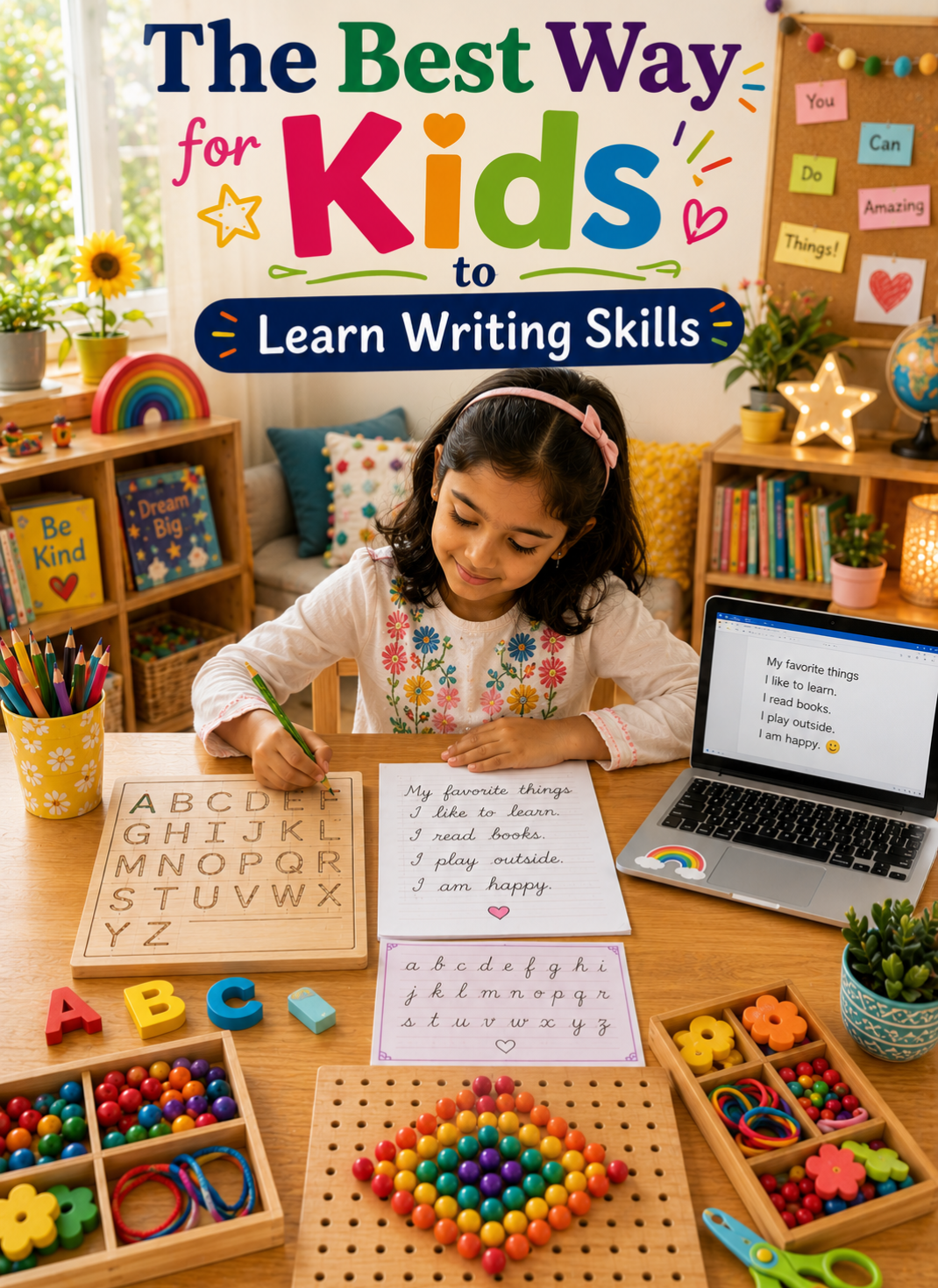
When Print Is the Best Starting Point
Print is often the first style children learn because the letter shapes are simple, common, and easier to recognise in books and classroom materials. For many younger children, print is the clearest way to learn letter formation and to build early handwriting confidence.
Print may be the best choice when: a child is just beginning formal writing, needs to focus on clear letter formation, or is working on basic legibility and spacing. Print can also be useful for children who are still developing hand control, because each letter is separate and easier to break into small steps.
Helpful support: Print often works best when paired with short practice sessions, adapted paper, and routines that reduce fatigue. You can connect this section to your Fine Motor and Handwriting Toolkit and Home Routines for Fine Motor and Handwriting posts.
When Cursive Can Help
Cursive can be helpful for some children because the flowing strokes reduce the number of pencil lifts and can make writing feel smoother. For children who struggle with starting and stopping each letter, cursive may improve rhythm, speed, and confidence.
Cursive may be a good fit when: a child has enough motor control to form letters consistently, enjoys the connected movement, or benefits from a style that feels more continuous than print. Some children also like cursive because it can reduce letter reversals and support a more automatic writing pattern over time.
Helpful support: Introduce cursive only when it feels manageable, not as a way to force handwriting improvements too quickly. This section pairs well with your Handwriting Progress Over Time, Handwriting Success Stories, and Praxis and Motor Planning in Children articles.
When Typing Is the Better Option
Typing is often the best choice when the main problem is not ideas, but the physical effort of getting words onto paper. It can reduce hand fatigue, help children write longer answers, and make it easier to organise thoughts without worrying as much about letter formation.
Typing may be the best fit when: a child gets tired quickly, writes very slowly, has handwriting that limits classroom performance, or needs to complete longer assignments. It can also be a useful accommodation while handwriting skills continue to develop in short, focused practice tasks.
Helpful support: Typing does not mean handwriting is abandoned completely. It works best when used alongside small handwriting tasks, strong classroom support, and a clear plan that reflects the child’s needs. Your Executive Function and Handwriting and Sensory-Friendly Classrooms and Handwriting posts fit well here.
How to Choose for Your Child
The best writing style depends on the child, not on a single rule for everyone. Parents and teachers can ask a few simple questions: Is the child still learning letter formation? Is hand fatigue a problem? Does the child write clearly enough for school demands? Does one style reduce frustration more than the others?
If handwriting is still very new, print is often the right place to begin. If the child already writes reasonably well and enjoys the flow, cursive may be worth exploring. If the child’s main barrier is output speed, stamina, or pain, typing may be the most practical support for longer tasks while handwriting continues in short bursts.
This section also connects to your Handwriting Support Plan for Children and Fine Motor and Handwriting FAQ posts, because both help families decide what to try first and when to revise the plan.
How to Balance Handwriting and Typing
Many children do best with a flexible mix rather than only one format. For example, they may handwrite short classroom tasks, practise cursive or print during skill-building time, and type longer assignments when the focus is on content rather than letter formation.
A balanced approach helps children keep building handwriting skills without letting fatigue or frustration take over. It also gives them a way to show what they know, even when writing by hand is still hard.
You can use this section to point readers toward your Handwriting Progress Over Time and Handwriting Success Stories posts, which show how progress often happens gradually and in more than one way.
Want to make writing easier at home? Our Educational Peg Boards and fine-motor toys are a simple way to build the hand skills behind print, cursive, and typing readiness through play.
Shop Educational Peg Boards Visit Our Google Business ProfileMontessori Toys Team
We help families and teachers choose practical handwriting approaches that support confidence, comfort, and progress.