

Is Your Child Ready to Write? Fine Motor Skills by Age
In this guide:
What Writing Readiness Means
Writing readiness is the combination of physical, visual, sensory, and attention skills that make handwriting easier for a child. It includes posture, shoulder and hand control, visual-motor integration, sensory regulation, and the ability to stay with a task for a short period of time.
Because these abilities develop at different rates, readiness is not a single milestone that appears all at once. It grows gradually through play, movement, and meaningful hands-on experiences that prepare the child for writing later on.
This topic connects closely to your Fine Motor Milestones Birth to Age 5 post and helps parents understand the building blocks that come before formal handwriting.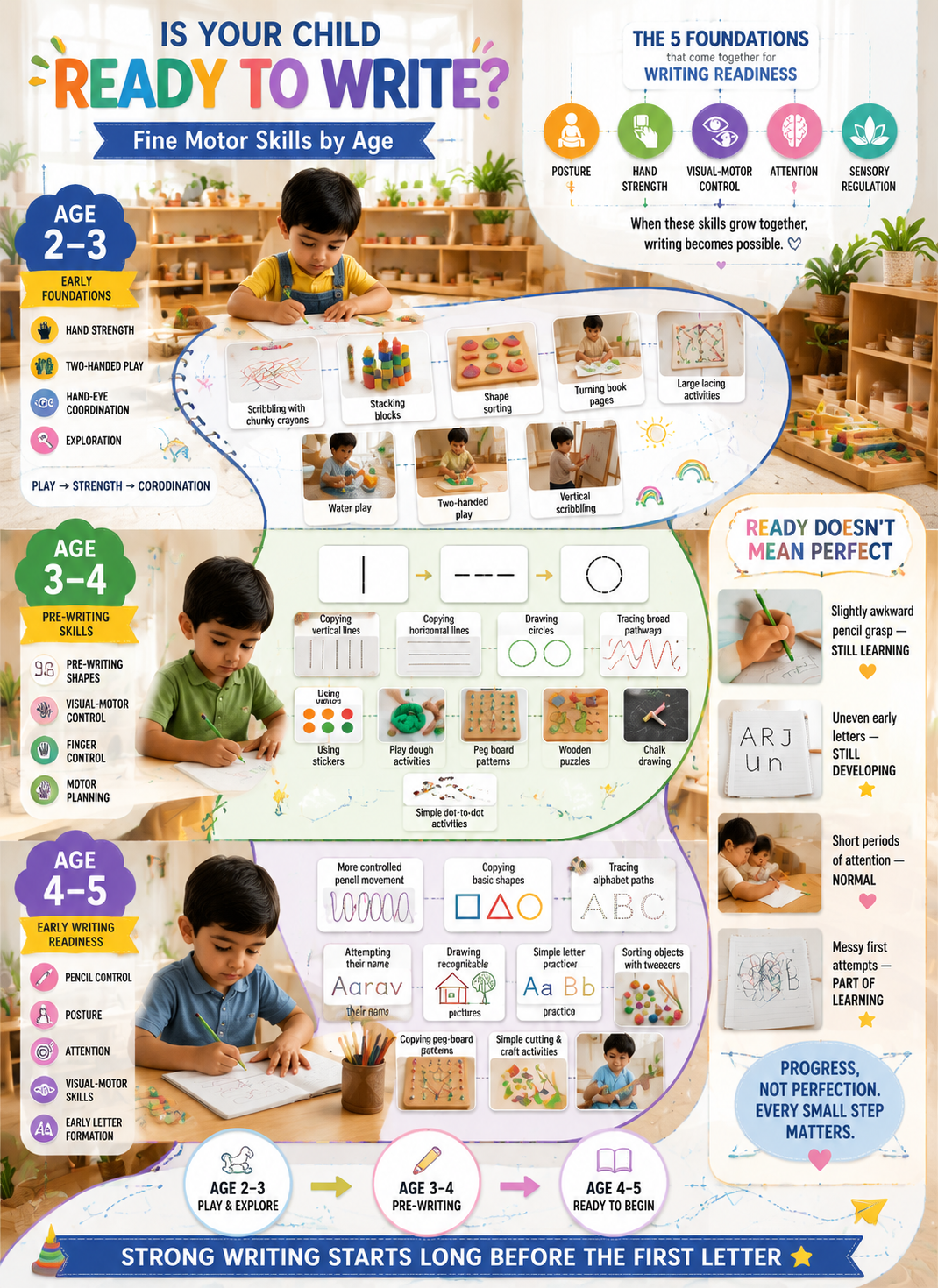
Age 2–3: Early Foundation Skills
At two to three years old, most children are not ready for letter writing yet. This stage is about exploring movement, objects, and tools so the hands and eyes begin working together in a more controlled way.
Common signs of growth: Scribbling, holding chunky crayons, pushing and pulling toys, stacking, turning pages, and using both hands in play. These activities help children build the hand strength, coordination, and attention that support later writing.
Helpful activities: Large crayons, water play, blocks, lacing, shape sorters, and simple drawing on vertical surfaces. Your Hand-Eye Coordination in Children and Bilateral Coordination in Children articles are useful companions at this age.
Age 3–4: Pre-Writing Skills
By three to four years old, many children start showing stronger interest in drawing, copying shapes, and using tools with more intention. This is the age when pre-writing play becomes especially valuable because it builds control without overwhelming the child.
Common signs of growth: Copying vertical and horizontal lines, making circles, using crayons with more control, and enjoying colouring or tracing activities. Children may still need help with direction, pressure, and staying on the line, but the foundation is starting to appear.
Helpful activities: Tracing paths, chalk on the floor, stickers, dot-to-dot drawings, puzzles, and playdough tools. Your Crossing the Midline in Children and Praxis and Motor Planning in Children posts fit well here because both skills support smoother tool use and movement planning.
Age 4–5: Early Readiness
At four to five years old, many children begin showing the early control needed for more direct handwriting practice. This does not mean they should be writing long sentences yet, but it does mean they may be ready for short, focused practice with letters, names, and simple copying tasks.
Common signs of growth: Better pencil control, copying basic shapes, stronger interest in letters, and the ability to stay at a short table task for a brief period. Children at this stage often need encouragement, not perfection, because their motor and attention skills are still developing quickly.
Helpful activities: Name practice, simple tracing, sorting, tracing alphabet paths, and short crafting tasks. Your Hand Dominance in Children and Proprioception and Pencil Pressure articles are especially relevant at this stage.
What Readiness Is Not
Readiness is not the same as a perfect pencil grasp, perfectly neat letters, or the ability to sit still for a long time. Many children are still learning those things when they first start writing, and that is part of normal development.
Readiness is also not a reason to avoid writing altogether until every skill is “finished.” Children often learn best when writing is introduced slowly, alongside play, movement, and fine-motor practice. This is why your Handwriting Readiness by Age and Handwriting Myths for Children posts can help parents avoid unrealistic expectations.
How to Support Readiness at Home
The best support is usually simple, regular, and playful. A child does not need long handwriting drills to become ready; they need repeated chances to build the body and hand skills that make writing easier later.
Try movement breaks, vertical drawing, playdough, tweezers, stickers, lacing, and short copying tasks mixed into daily routines. Your Home Routines for Fine Motor and Handwriting, Sensory-Friendly Fine Motor Routine, and Tactile Sensitivity and Fine Motor Skills posts provide practical ideas for making those routines work.
When to Look Deeper
If writing remains very hard, very slow, or very frustrating even after regular practice, it may be time to look more closely at the child’s development. Ongoing difficulties with scissors, buttons, cutlery, or other hand tasks can also be a sign that more support is needed.
Your Handwriting Red Flags by Age, Fine Motor and Handwriting FAQ, and Handwriting Success Stories articles are a strong next step for families who want to understand when to keep supporting at home and when to ask for help.
Want to support writing readiness at home? Our Educational Peg Boards and fine-motor toys help children build the hand strength, coordination, and control that support early writing.
Shop Educational Peg Boards Visit Our Google Business ProfileMontessori Toys Team
We help families and teachers understand writing readiness with practical, age-based guidance.